Companion Cropping in Winter Oilseed Rape
Project Background
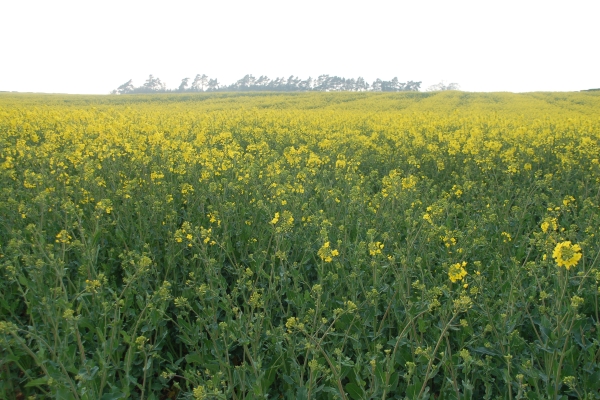
This pioneering three-year research project is investigating how companion cropping can support pest, weed, and disease management in oilseed rape (OSR) grown in Sweden and the UK.
Running from January 2025 to December 2027, the study aims to develop integrated pest management (IPM) strategies that reduce reliance on pesticides, offering growers practical cultural and organic crop protection techniques.
The project has been generously funded by the Ekhaga Foundation and is a collaboration between ADAS, Agricology and Agrovast, combining expertise to explore sustainable solutions for OSR growers facing increasing challenges.

Aims & Approach
Over the three-year programme, the project focuses on three core objectives:
Evaluating companion cropping strategies
- Assessing how different companion crop species and mixture complexities influence pest, weed, and disease pressure in OSR, alongside impacts on crop performance and economic viability.
Building a knowledge exchange network
- Establishing farmer-led discussion groups in both the UK and Sweden to encourage peer-to-peer learning and the sharing of practical experiences and innovations.
Wider dissemination of IPM successes
- Communicating research findings and farmer learnings to the wider farming community to support the adoption of low-input and organic crop protection approaches.

*Get Involved*
We are actively seeking farmers to participate in the trials. If you’re interested in contributing to this vital research, please get in touch at Duncan.Coston@adas.co.uk.
Trial Design
In the UK, Year 1 trials are located at three sites in Lincolnshire, Yorkshire, and Cambridgeshire.
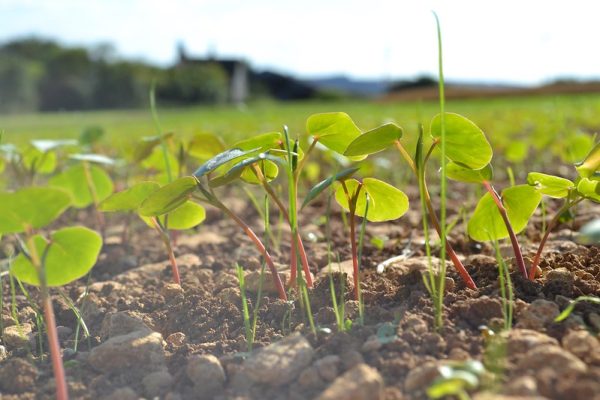
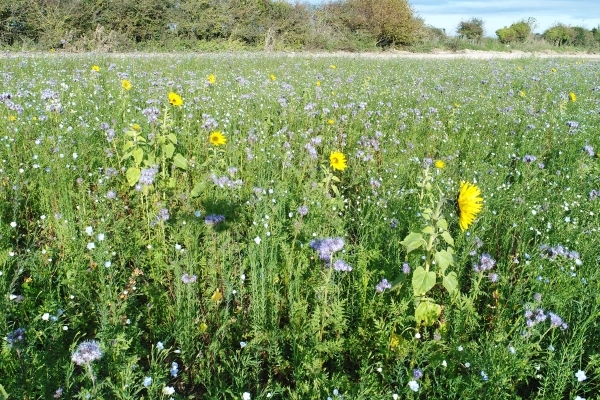
The companion crop seed mix consists of:
- Buckwheat 51% (by weight)
- Fenugreek 31%
- Berseem clover 18%
The companion crops are drilled at the same time as the OSR, using a separate hopper on the drill. Each trial site includes three treatments:

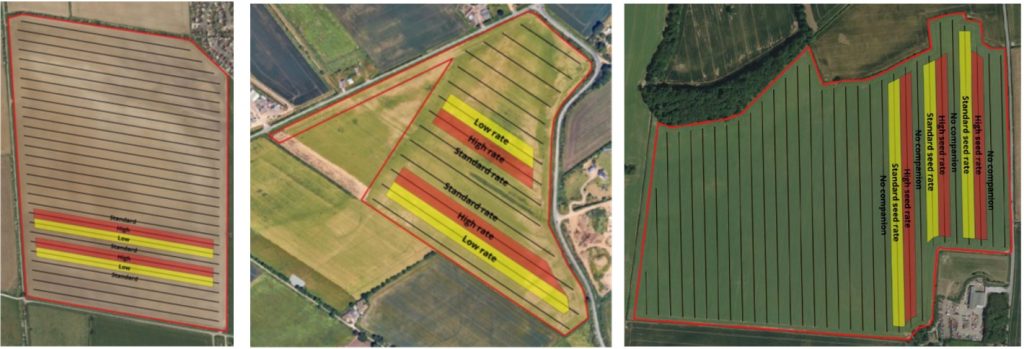
In all trial plots assessments of the effects of companion cropping will be made by monitoring a range of crop, companion crop, weed, disease, and pest parameters throughout the growing season.
- Crop performance will be assessed through measurements of plant density in the autumn, spring plant counts, final crop yield, and visual assessments of crop health, including colour and leaf structure.
- Companion crops will be evaluated for emergence as a percentage ground cover in early autumn, overall autumn cover, and levels of winter kill.
- Weed pressure will be monitored where possible by recording pre-drilling weed burden, alongside detailed weed species identification and weed plant counts taken during autumn, late winter, and spring, including grass-weed headcounts in May and June.
- Disease incidence will be assessed through visual crop scoring for any disease symptoms observed during the season.
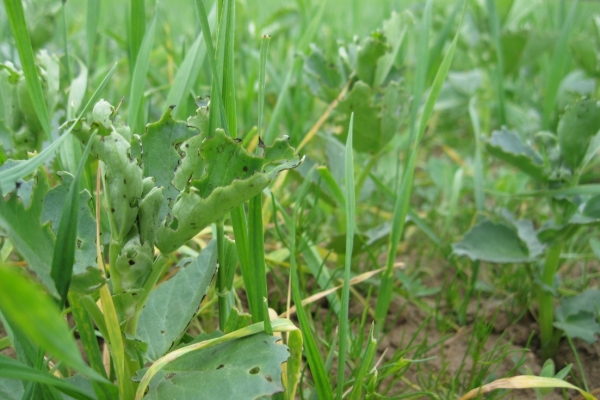
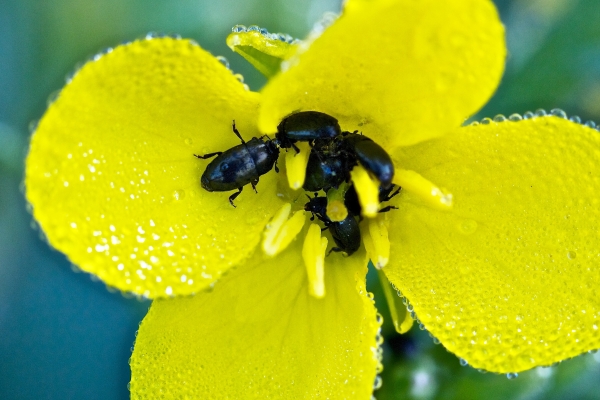
- Pest activity will be monitored by assessing leaf loss caused by slugs and cabbage stem flea beetle (CSFB), the presence of CSFB larvae, and damage from pollen beetle and brassica pod midge.
Project Outputs
Over the lifetime of the project, a range of research outputs and farmer-focused resources will be published on this project page to share findings, practical insights, and lessons learned from the trials.
- Podcast series (4 episodes)
Across the lifespan of the project periodic podcasts will be released that explore companion cropping in winter OSR. Episodes will introduce the project partners and early results, examine agronomic approaches and highlight farmer experiences, provide wider industry perspectives, and conclude with full results from two trial seasons.
The first podcast is available to download here: Rethinking Oilseed Rape – The Promise of Companion Cropping or listen below…
- On-farm demonstration event (autumn 2026)
A practical demonstration event will showcase trial outcomes, providing an opportunity to discuss successes, challenges, and practical considerations with farmers, advisers, policymakers, researchers, seed producers, and other industry stakeholders. - Cross-country webinar (winter 2027)
A final end-of-project webinar will bring together full trial results, farmer learnings from the UK and Sweden, and discussions on future research needs and next steps for companion cropping and IPM in OSR. - Farmer case studies (winter 2027)
Case studies will capture on-farm experiences, highlighting both successes and challenges encountered during the project. They will present trial results in a farmer-friendly format to support informed decision-making and encourage adoption of companion cropping with reduced pesticide inputs.
Associated Agricology Partner Organisation(s):
Related articles