Grass-clover ley in organic rotations
Resource explained
Crop rotations can be used to build soil fertility and biological activity, increase soil organic matter, prevent disease, control weeds, increase farm biodiversity, and promote crop and animal health. You can use rotational grazing on an all-grass farm to benefit sward condition, animal health and nutrient balance. This factsheet, produced by IBERS Grassland Development Centre, provides a useful checklist to help plan basic grass-clover ley rotations. It is divided in to quick-reference sections on: Examples of rotation designs; key roles that grass clover leys and other legumes play in short and medium term rotations (with examples included); tips on how to plan; constraints and opportunities depending on how you want to use the leys; ‘rules of organic rotations’; and examples of short and medium term grass clover ley mixtures (outlining species proportions within the leys, ways in which they can be used and yield guidance).
Findings & recommendations
- There is no blueprint rotation; variations can include catch forage or vegetable crops grown between legume leys and cereals. More than one rotation may be needed to accommodate the field types on your farm. If you are in a wetter area, it may be better suited to a longer legume phase.
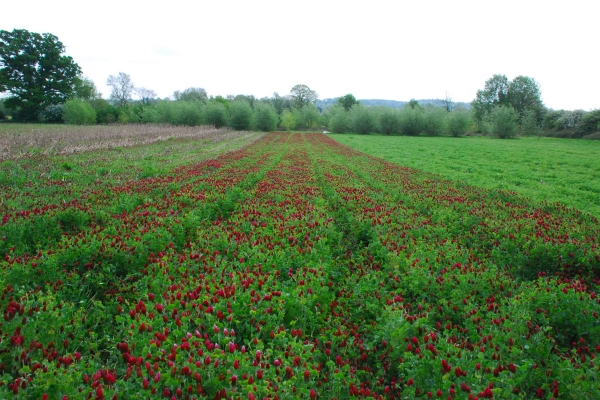
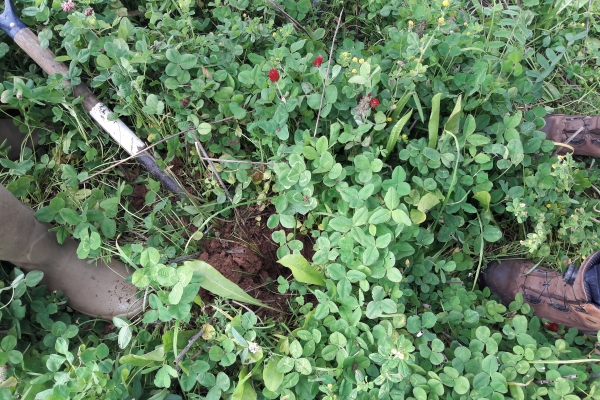
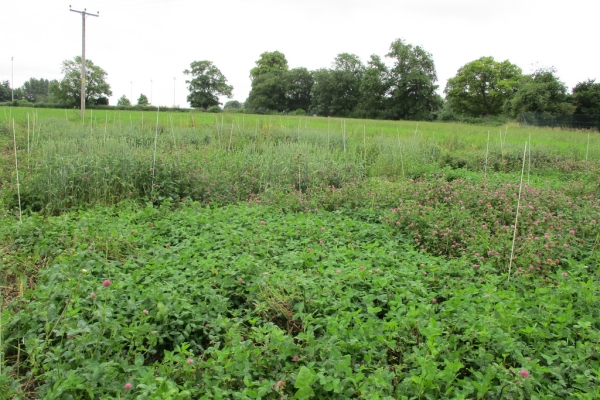
- Combining grass leys with clover and other legumes can benefit your soil, crops and animals through: increased nitrogen fixation capacity, improved soil structure, build up of organic matter, improved weed and disease control, and provision of high protein feed.
- The ‘rules’ of organic rotations are:
- Follow shallow crops with deep rooting crops.
- Follow nitrogen-fixing crops with nitrogen demanding crops.
- Follow weed suppressive crops with slow to establish crops.
- Use appropriate time intervals between similar crops (i.e. five years between red clover crops).
- Balance cash and forage crops (no more than 50% cereals and 20% minimum of legume leys).
- Maintain soil cover whenever possible; using catch crops, green manures or undersown crops.
- Alternate autumn and spring sown crops.
- Use resistant varieties and mixtures when possible.

Funders:
IBERS, A.U. incorporating the IGER - Institute of Grassland & Environmental ResearchOrganisation(s):
- Institute of Biological/ Environmental & Rural Sciences (IBERS) Grassland Development Centre/ Aberystwyth University
Date:
01/11/2015Evidence:
Applied research
Copyright:
All Rights ReservedRelated theme:
Key Farming Practices:
Related articles