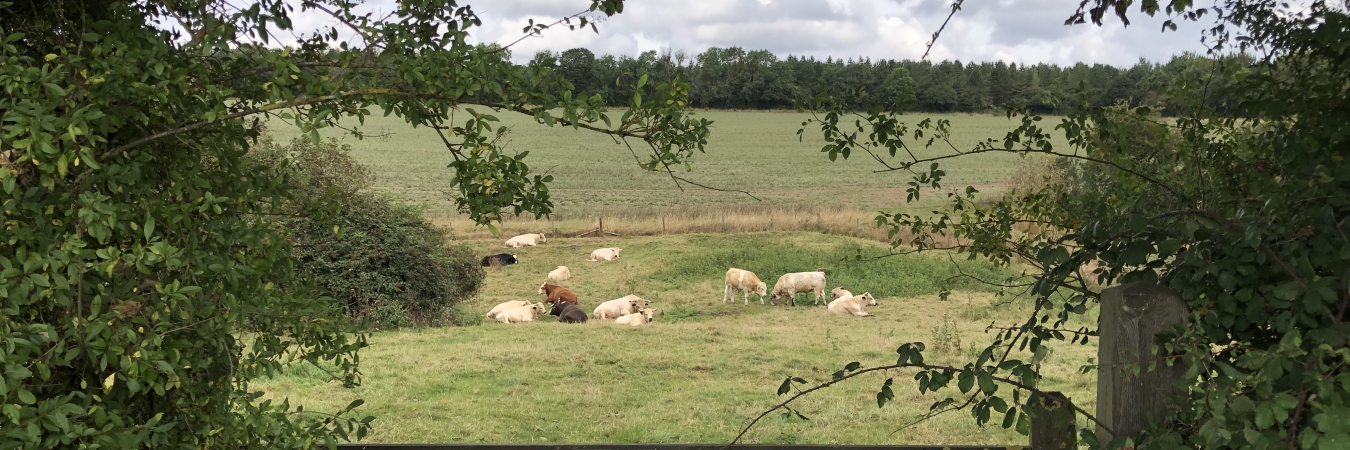
Delivering Greener Grassland – A Cross-Industry Partnership to Grow Pasture Based Solutions to Climate Change
How can the farming industry be efficient, sustainable and proactive, whilst maintaining profitability, regenerating biodiversity and contributing to ambitious carbon Net Zero targets at national and global level? This is, quite literally, the billion dollar question on many farmers’ lips at the moment – and as the sector comes under increasing pressure to evidence its environmental contribution, it’s a question that’s becoming ever more urgent.
Looking beyond the trees
Integration of trees into farmland through woodland expansion and integration of agroforestry is receiving increasing recognition for delivering multiple benefits for both people and nature. But what role can productive grassland play in the drive for positive change at landscape scale?
This is an important question as almost 40% of the UK is covered by permanent pasture or rotational grass. Totalling around 12.3 million hectares,1 grassland is the UK’s largest crop and one of the biggest carbon sinks with an estimated 2bn tonnes of carbon sequestered at any one time.2
Pastures new
To investigate this question further and offer practical advice on how to optimise the benefits of grassland for both productivity and climate change mitigation, specialists at Germinal in long term collaboration with researchers at the Institute of Biological, Environmental and Rural Science (IBERS), part of Aberystwyth University, have brought together a new cross sector group. The Net Zero from Productive Grasslands (NZPG) partnership is looking to identify and promote opportunities to develop integrated systems that really make the most of grass. Together with Sainsbury’s, Waitrose, Dalehead Foods, Mole Valley Farmers, NFU/NFU Cymru, CIEL, KTN and Hybu Cig Cymru, LEAF (Linking Environment And Farming) is a proud member of this new and exciting alliance.
The group’s aim is to develop agri-food and bio-fuel systems that encompass pasture-based solutions for the future, using a circular economy framework. Such solutions will encompass both rotational grass and permanent pasture, integrating soil management, livestock, nutrient use efficiency, biomass production and emission reduction. Research projects driven by the partnership will develop new, more sustainable grass and forage crop varieties to buttress the role of farmers as producers of food, as well as caretakers of ecosystems and resources. This will include:
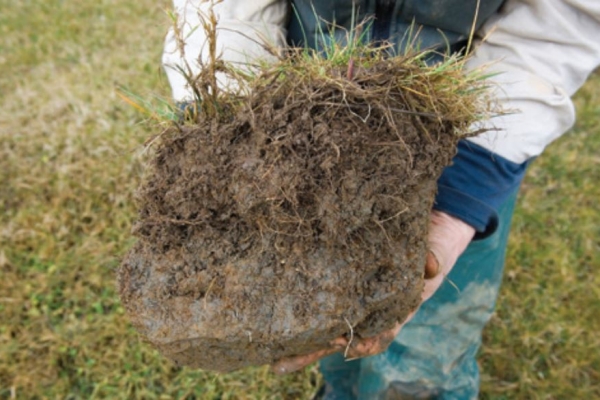
– Development of new varieties of grasses and clovers with stronger and deeper roots and higher resistance to pests and diseases for better soil health, structure, and carbon sequestration.
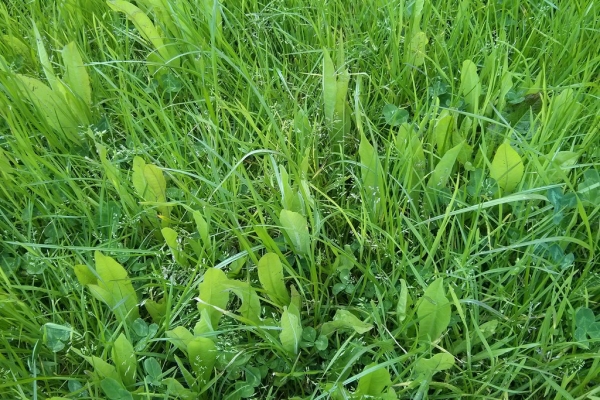
– Clover varieties that require less phosphate and are higher in nitrogen and tannins, reducing fertiliser inputs within a sward and across the rotation.
– Grass varieties that produce higher yields with less N input and higher sugar and protein content, to reduce methane and ammonia emissions from livestock.
Collaboration to accelerate change
The formation of this ground-breaking alliance comes at a critical time for sustainable agriculture, with the entire food chain sharing a collective responsibility to support change in farm practices where research shows opportunities for improvement in environmental and social outcomes.
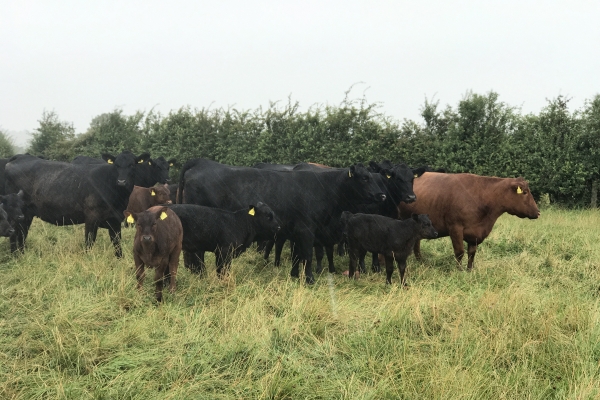
For dairy and beef farmers on the frontline of climate change challenges, an appetite to continue producing high quality nutritious food whilst also supporting climate positive outcomes at scale means innovation is timely. Development and ground truthing of emerging grassland technology and practice by the NZPG partnership will help to feed this need, accelerating meaningful change in the availability and uptake of pasture-based solutions to global issues at landscape scale.
References
1 DEFRA, 2016. National Statistics – Agriculture in the United Kingdom 2015. https://www.gov.uk/government/statistics/agriculture-in-the-united-kingdom-2015
2 Sward, et al. (2016). Legacy effects of grassland management on soil carbon to depth. Global Change Biology 22(8). https://doi.org/10.1111/gcb.13246
Header image courtesy of Will Silby, LEAF. All Rights Reserved
Associated Agricology Partner Organisation(s):
Author:

Published date:
27th September 2021Related farming theme:
Key Farming Practices:
- Cover crops
- Diverse / herbal leys
- Diverse feed & forage
- Leys in crop rotations
- Mixed farming
- Soil monitoring
Organisation(s):
- Linking Environment and Farming (LEAF)
Related articles