Growing without Government Support – Can Farmers Flourish in a Subsidy-Free Future?
Every February the BASE-UK Annual Conference provides a forum for members and supporters to come together, learn and share ideas around prominent farming themes. This year I was lucky enough to attend the conference, which took place in Huntingdon in Cambridgeshire, on behalf of Agricology. It was a valuable opportunity to meet a diverse group of farmers from across the UK and hear some brilliant speakers talk on topics ranging from biodiversity net gain (BNG), and the science behind soil nutrition, to growing truffles in the UK, and selling direct to consumers using the power of social media.
BASE-UK is an independent, farmer-led knowledge exchange network dedicated to regenerative agriculture, which originated in France in 2000 and established its British branch in 2012. The theme for the conference in 2026 was ‘Growing without Government Support’, exploring how farmers can build thriving, resilient businesses amid a challenging landscape of declining government support and shifting policy frameworks. Across the 2-day event, speakers from across the UK provided a different perspective on this complex issue, either sharing their personal experience or outlining research findings with practical implications for farmers looking to move away from subsidy reliance and towards a future-ready farming model.
The conference began with a welcome from BASE-UK Chairman Edwin Taylor, who oversaw the AGM proceedings on behalf of the committee. It was then over to the first speakers of the day – all of whom had first-hand experience at the coalface of regenerative agriculture, farm diversification and adapting their business in the face of adversity.

BASE UK Chairman Edwin Taylor
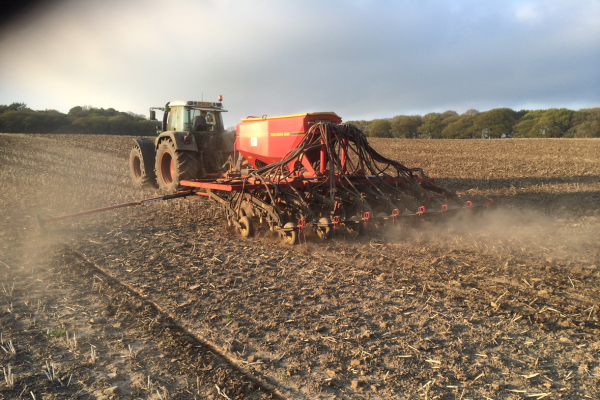
Jock MacFarlane from Easter Rattray Farm in Blairgowrie titled his presentation ‘Barley, beasts and berries to no-till, trees and truffles’, to encapsulate how his farming approach and products have shifted dramatically over the course of his tenure. Jock’s father purchased Easter Rattray Farm in 1981, and since that time it has taken on several different identities producing suckler cows, Friesian bullocks, arable grain, and soft fruits for both canning and supermarkets. After a short career break to compete in the carriage driving World Championships, Jock joined BASE-UK in 2016. After listening to a talk by Fredrick Thomas the following year, he started to transition towards regenerative agriculture and a reduced tillage model to improve the health of his soil and increase biodiversity.
Today, Easter Rattray Farm is a diverse enterprise consisting of no-till arable crops, agroforestry, holiday lets, DIY stables, and cut-your-own Christmas trees. Jock has also planted an orchard of oak, holm oak and hazel inoculated with truffle fungi, in the hope that a warming climate will produce profitable harvests in decades to come. Although Jock was clear to state that he had accepted and relied on subsidies to an extent throughout the whole of his farming career (including AECS, BPS and FWS), the small, unsubsidised elements of his business now contribute half the farm’s income and are going from strength to strength.

Young hazel tree
Next to speak was Dennington Hall Farms Manager Ryan McCormack from East Suffolk, who gave his perspective on ‘The future of family farming’. Ryan explained how he models his farm business around four strong pillars to spread exposure and risk. These consist of Food and Farming, Environment, Energy and Development. Each pillar behaves differently under pressure, and when leveraged in tandem they provide the capacity to buffer the inherent instability of the rural economy. Ryan was keen to stress that lack of clarity and the absence of long-term planning are often the key barriers to resilience for farmers, and how by focusing on the four pillars he is building system fit for the next generation that can survive independently of government support.
Some standout activities from Dennington Hall Farms portfolio include a 12-year diverse rotation (including cover and catch crops grazed by a flying flock of sheep), direct to customer livestock sales, the creation of nature reserves for rare birds (priming the farm to take advantage of emerging BNG markets), sensitive housing development, and a wedding and events business that supports the local community.

Martin Caunce from Brow Farm in Lancashire then described how soil erosion and declining profitability lead him away from growing lettuce using stale seed beds towards a regenerative approach that keeps nutrients and moisture in the ground and provides habitats for wildlife. Martin’s approach to grant funding was that the money should be used primarily to improve infrastructure on the farm and invest in new equipment rather than cover core costs or subsidise lack of profitability.
David Wheatly (pictured left) is a farmer who has taken a unique approach to reducing reliance on supermarkets by leveraging his social media platform to sell direct to consumers across the country. David (Petite Peonys) saved his business from bankruptcy by cutting out the middleman and selling his cut flowers, peony tubers and orchard fruits online, using entertaining and educational posts on Instagram, Facebook and TikTok to drive customers towards his website. The journey has not been without challenges, but David has seen real financial benefits from this innovative model which takes advantage of a growing desire amongst consumers to ‘buy British’ and support local farmers.
The conference featured further interesting talks and discussion from farmers and researchers, including Agricology-profiled farmer James Bucher, Nuffield-scholar Tom Pearson, and crop and soil scientists Adrian Newton and Dr Stephen Haefele. There was lots to learn, and I left with a plethora of new ideas to reflect on and explore further.
BASE-UK is a network that places a strong emphasis on the value of community and views peer-to-peer knowledge sharing as a key driver for change within the sphere of sustainable and regenerative agriculture. In-person events like this really highlight this commitment to the power of community, offering networking and learning opportunities that are impossible to replicate in an online environment.

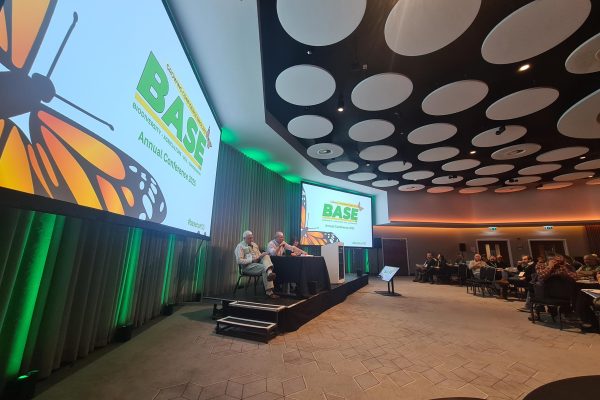
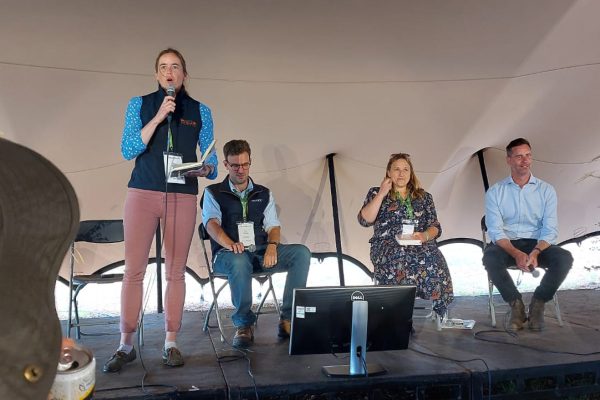
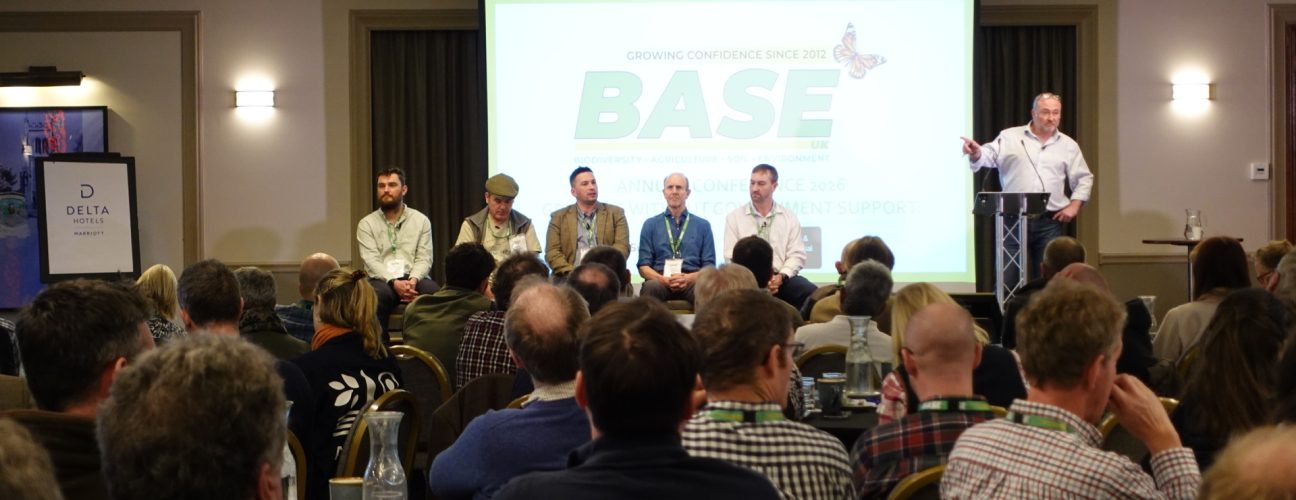
Panel speakers (left to right): Joe Collins, Martin Caunce, Ryan McCormack, Jock MacFarlane. Credit: Annie Winn.

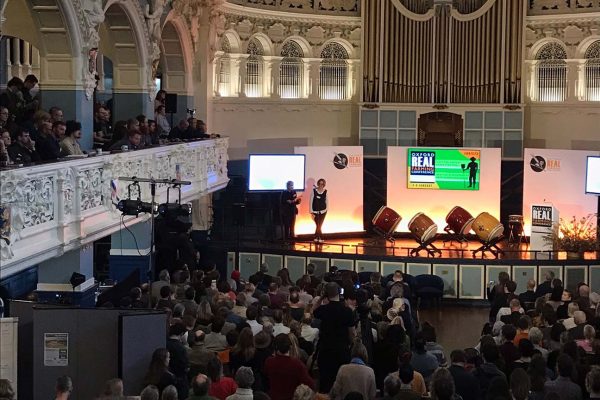
Conference audience. Credit: Annie Winn
In a climate where the number of ‘hats’ and responsibilities that farmers are expected to take on are only increasing as government support declines and the agricultural landscape continues to change and evolve at alarming speed, the BASE-UK Conference offered a blueprint for resilient and sustainable 21st century rural economy. For me, it offered real hope that a future where farmers can survive and flourish without government funding is possible. Thank you to Rebecca and the team for organising such a brilliant event!
You can learn more about the ethos of BASE-UK and how to become a member here.
Author:
Published date:
19th February 2026Related farming theme:
- Agroforestry
- Beef cattle & sheep
- Biodiversity
- Business management
- Cereals, oil seeds & pulses
- Climate
- Communities & education
- Compaction & cultivation
- Conservation agriculture
- Crop nutrition & fertility building
- Dairy cattle
- Farm management & economics
- Grasslands & forage crops
- Integrated farming
- Markets & food systems
- Natural resources & waste
- Nutrition & public health
- Organic farming
- People & skills
- Pests & diseases
- Pollinators & ecological services
- Regenerative agriculture
- Regulations, standards & policy
- Roots & horticulture
- Soil biology
Key Farming Practices:
- Companion crops
- Cover crops
- Direct drilling
- Direct selling
- Diverse / herbal leys
- Diverse rotation
- Encouraging beneficial insects
- Habitat creation
- Integrated pest management (IPM)
- Leys in crop rotations
- Low input breeds
- Low input crop varieties
- Minimum Tillage
- Mixed farming
- No tillage
- Novel / niche crops
- Pasture fed livestock
- Soil monitoring
Related articles