Cover Crops Guide

Resource explained

The Cover Crops Guide describes itself as ‘the UK’s first accessible, independent, farmer-led and scientifically supported farmers’ guide on cover cropping.’ It was founded by Yorkshire farmer Angus Gowthorpe and launched in 2023 in partnership with a steering group: the Farmer Scientist Network, a group supported by the Yorkshire Agricultural Society, David Purdy Soils, Kings Crops/FrontierNewcastle University and AHDB. The guide was designed together with farmers through a series of online, in-person and on-farm workshops with farmers and other key stakeholders. This identified the most valuable content and key knowledge gaps. Funds were provided through the Farming Innovation Programme, delivered by InnovateUK in collaboration with Defra. In 2024, AHDB took on the overall responsibility for the guidance and continue to work with the steering group to develop the guide. The guide takes the form of a website with different sections on soil health, a cover crop selection tool, establishment techniques, and methods of cover crop destruction. There are also links to online cover crop resources, and a section with case studies and ‘cover crop champions.’

Findings & recommendations

  • Cover cropping isn’t one-size-fits-all; poor choices at any stage (species, timing, termination) can lead to failure, so tailor decisions to your soil, climate, rotation and equipment.
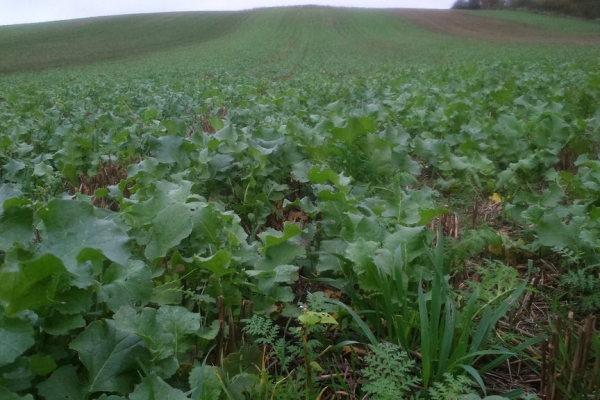
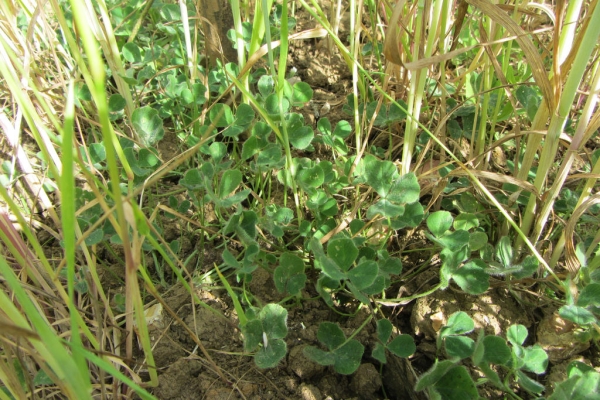
  • Intercropping cover crops between cash crops can improve soil organic matter, reduce erosion and nutrient loss, increase water infiltration and benefit soil structure and biodiversity.
  • Establish cover crops soon after harvest, ideally in warm, moist soil, to maximise growth and biomass before colder weather; late sowing reduces effectiveness.
  • Choose sowing methods and seed rates that suit soil type and seed characteristics to ensure good seed-to-soil contact and reliable establishment.
  • Terminate cover crops at the right time (typically well before the next crop), to avoid yield penalties and allow residues to break down, improving soil warming and reducing disease or weed risks.
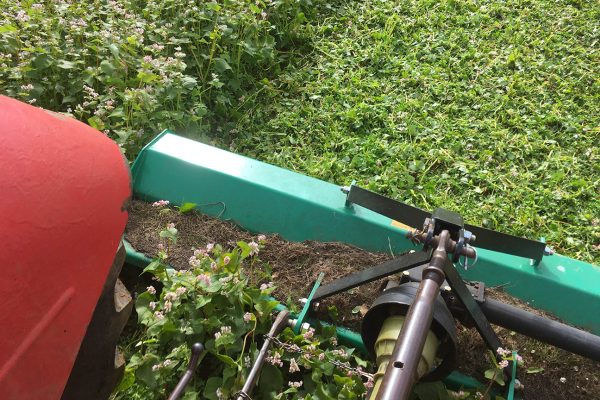
  • Use appropriate termination methods (grazing, rolling, crimping or herbicide) based on cover crop species, soil conditions and weather to avoid soil compaction and ensure effective destruction.

Summary provided by:

Phil Sumption

Edited by:

Janie Caldbeck

Related articles

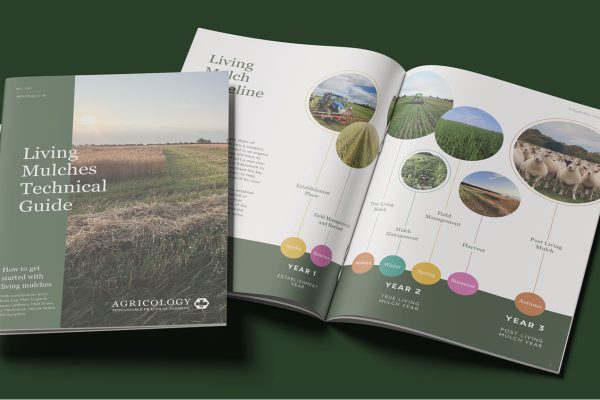
Living Mulches – Technical Guide

This Agricology technical guide is designed to support farmers in making informed decisions about adopting living mulches in arable systems.

The AgroDiversity Toolbox

Everything you need to know about the management of cover crops: Check out this free, interactive web-based tool.

Cover Crops

Guidance on selecting and managing cover crops according to your requirements, outlining financial, agronomic and environmental benefits.

Cover crops help to reduce diffuse water pollution

An update from research undertaken as part of the Demonstration Test Catchments research platform established to investigate the extent by which on-farm mitigation measures can...

Cover crops in a no-tillage system

One of the AHDB 'Farmer Experience' profiles providing insights into how and why Jake Freestone of Overbury Farms uses cover crops.

Diversification of silage maize cultivation by using winter cover crops enabled by ultra-early maize varieties

Abstract created as part of the DiverIMPACTS project based on a long-term Dutch field trial, outlining practical recommendations, advantages, and challenges of combining winter cover...

Establishing summer cover crops before winter cereals in low tillage systems on sandy soils

Abstract created as part of the DiverIMPACTS project outlining some of the benefits that can be attained from establishing summer cover crops on sandy soils...

Film: Three farmers come together to research no till and cover crops

One of a series of Innovative Farmers films shining a light on a field lab - this one focuses on no till and cover crop...

Buckwheat for couch control: Final Report

The final report for from an Innovative Farmers field lab which investigated using buckwheat as a cover crop in vegetable rotations to reduce couch.

Cover Cropping – Successes and Failures

Footage of a Groundswell 2024 panel discussion organised by Agricology and The Allerton Project, with the panel and audience members sharing their experiences of growing...

Cover, Catch and Companion Crops

A comprehensive guide to help you protect and improve biological ecosystems and crop management, and your arable and livestock enterprises.

Impact of cover crops on yield and soils in the New Farming Systems programme

Research evaluating how cover cropping systems can contribute to soil structural improvement, fertility enhancement and yield responses.

Opportunities for cover crops in conventional arable rotations

An introduction to the potential environmental and agronomic benefits of cover crops in arable systems.

Green Manures for No-Till Market Gardens

OGA webinar on using cover crops and diverse mixes in no-till veg production to improve soil and reduce reliance on bought-in compost.

Sort out your soil

This Cotswold Seeds / Garden Organic publication provides detailed, practical information to help you select and use green manure crops.
To top