Less Bare, More there: Filling the Gaps in Soil Health – Clive Bright
Fields Good
Resource explained
This is a recording of one of the talks from the 2025 Fields Good regenerative agriculture festival held at The Sheddings on the Glenarm Estate in Northern Ireland. Organic Sligo farmer Clive Bright raises 100% pasture fed native breed beef using a very low input system which includes utilising agroforestry. He outlines how he has worked closely with nature to drive his business and how he manages a holistic approach where production, welfare and ecosystems all benefit. His talk includes reference to soil degradation and capping, using mob grazing, the significance of different grazing heights and long rest periods, advancing soil and animal health with agroforestry, and the value of a grazing plan. The recording includes some interesting questions from the audience and interesting responses!
Findings & recommendations
- Roots are key to soil structure – when you have bare soil you have little or no roots. It is important to focus on the impact of rain on bare soil and the impact it can have on the farm, and farm business and profit.
- Clive explains that due to poor practices in the past, a lot of the farm has an iron pan because of capping and soil structure breakdown. Plants saturate in that top layer because the iron pan is difficult to break down. There are three levels of capping – recent (a bit of crust on top which is easily broken up), immature (which is hard and thick enough to be impermeable to water and affect grass growth, limiting germination and plants growing through it), and mature. When a moss layer starts to grow on top, it is a sure sign it needs to be addressed!
- You can’t be formulaic, you need to keep observing, find the problems in your fields, come up with a way to advance the quality of the pastures.
- You can use animals to graze quite heavily, depending on what you want to do. Rest is the ultimate tool but continually over resting can thin out the sward because of the effect of shading out – plants already present will grow to senescence.
- It may be necessary to let your whole pasture go to seed so that you build up your seed bank and have a fresh generation, and stimulate more growth. It all depends on your context.
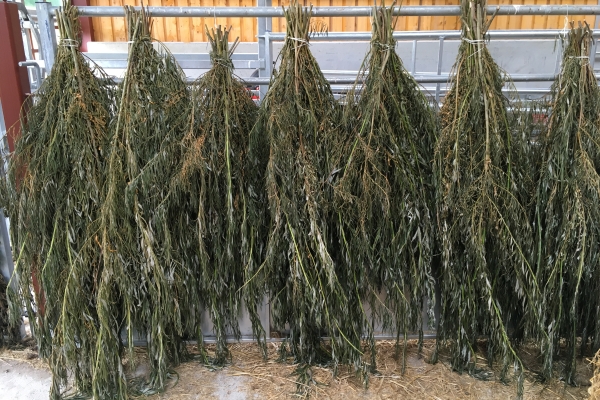
- Clive explains he has been experimenting with agroforestry on the farm over the years and is increasingly convinced that it provides the habitat that cattle should be in. There are many benefits to browse, particularly with willow which is very easy to grow and good for the cow’s gut health, parasite burden, and has anti inflammatory properties. The cows can self medicate, but because it is high in tannin, they won’t gorge on it. You can use an electric fence to protect trees if you need to.
Summary provided by:
Janie CaldbeckEdited by:
Janie Caldbeck
Organisation(s):
- Fields Good
Date:
14/10/2025Evidence:
Farmer experience
Copyright:
All Rights ReservedRelated theme:
Key Farming Practices:
- Cover crops
- Habitat creation
- Healthy livestock housing & shelter
- Pasture fed livestock
- Rotational grazing
- Silvopastoral
- Soil monitoring
Related articles