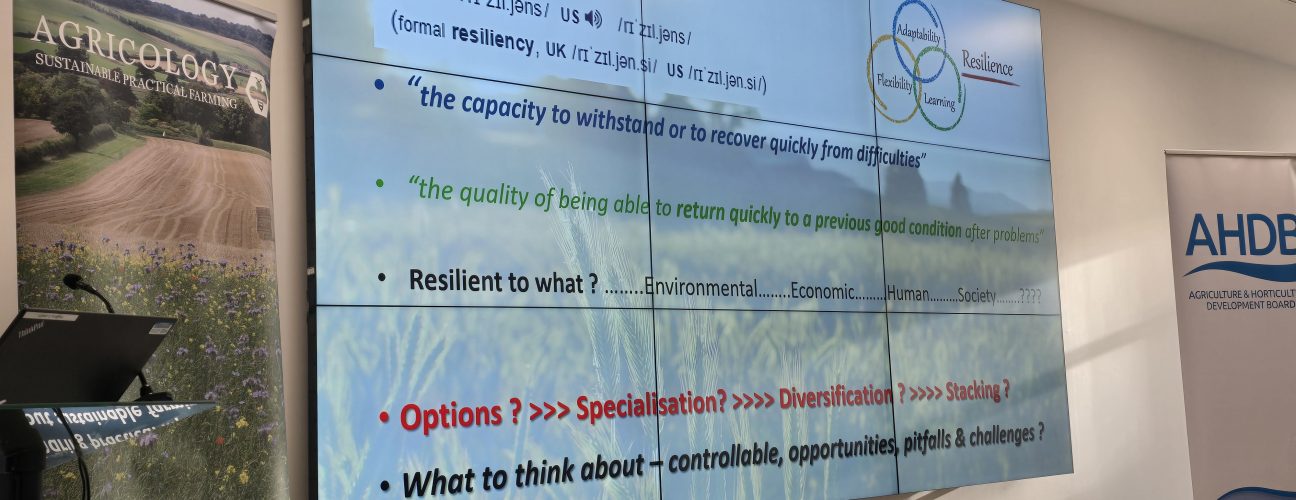
Diversification, Innovation and Collaboration at the Resilient Farm Roadshow
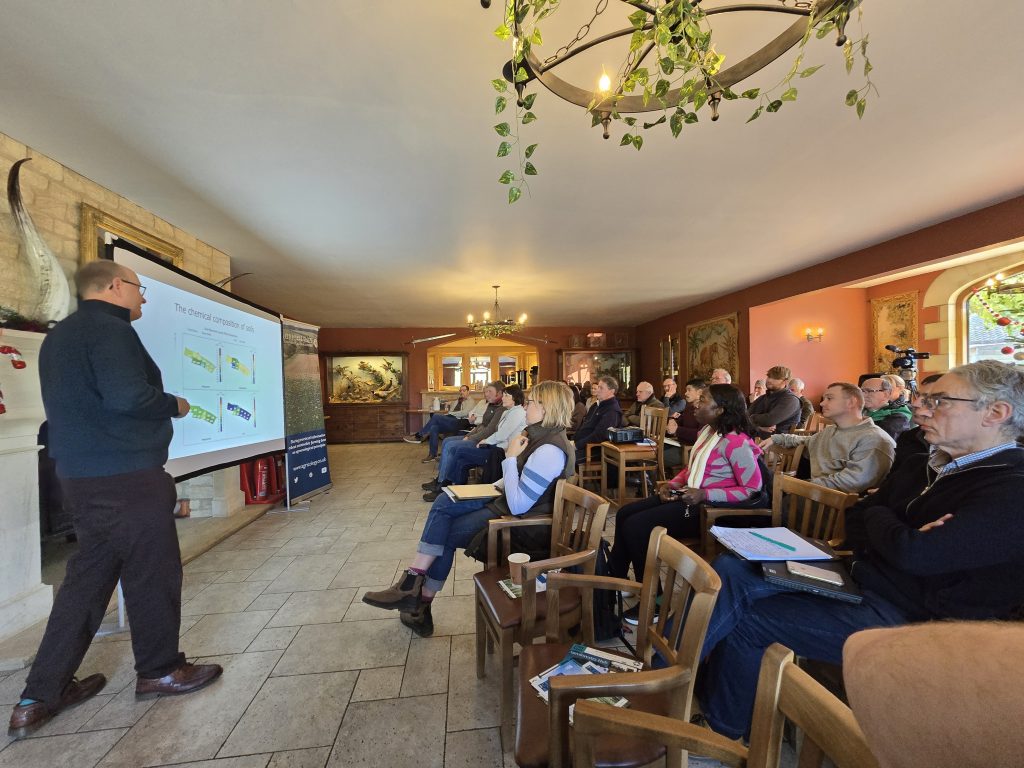
In November I travelled from Dundee to Peterborough with AHDB for the first two events of the Resilient Farm Roadshow, exploring what resilience looks like on UK farms in 2025 and beyond.
Our headline speaker Stephen Briggs, took a deep dive into the foundations of farm resilience, from soil health and intercropping to agroforestry, diversification, managing complexity, and building long-term soil organic matter. Stephen will speaking again at the three 2026 roadshow dates across the UK, and a video of his session will be available via the Agricology website when the event series comes to a close.
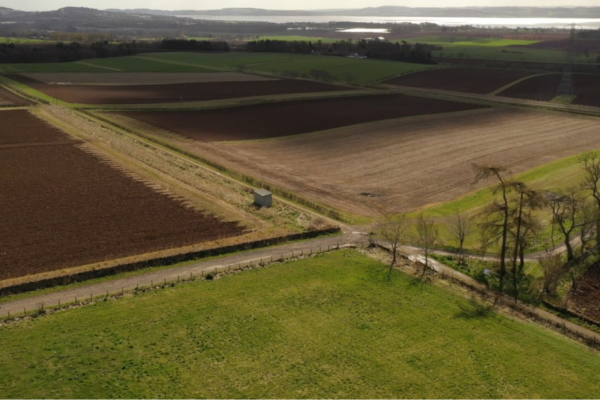
We wanted to bring you a snapshot of some of the talks that have taken place at the events so far which have featured regional experts. You’ll find an overview of David Aglen’s talk below from the Scotland leg of the roadshow. In Scotland we were also joined by Kathy Hawes and Andrew Christie, from the James Hutton Institute (JHI), who gave us a detailed picture of the Centre for Sustainable Cropping (CSC); a 42 hectare (ha) site at JHI that has been used for the past 16 years to carry out research on integrated, regenerative, and holistic approaches to arable crop production. You can find out all about the CSC in our most recent farmer profile.
Below you’ll also find a summary from Tom McVeigh’s talk in Peterborough, keep an eye out for a full recording of his session available on Agricology soon.
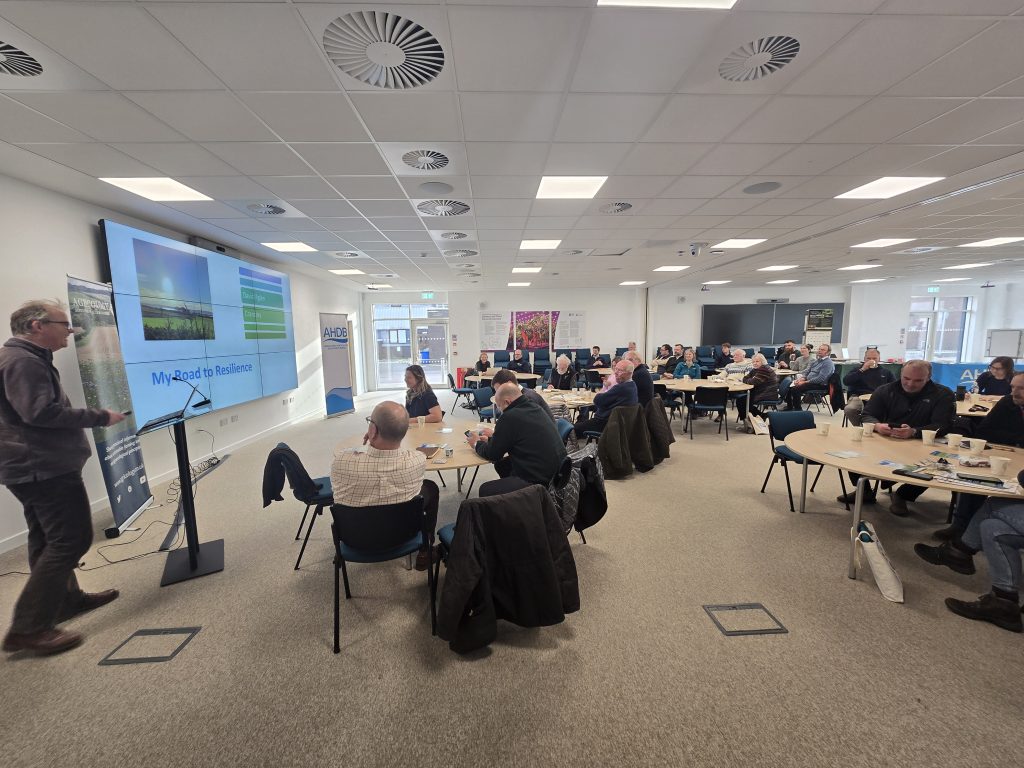
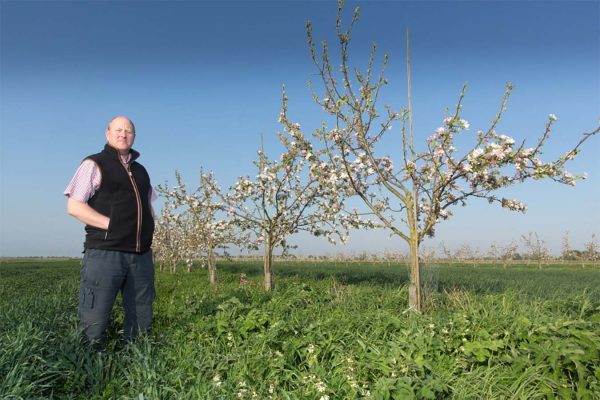
David Aglen
David highlighted his approach for building a more resilient, diverse and observationally-driven farming system. He emphasised that shifting a farm system requires long-term thinking, resisting fads, and grounding decisions in solid business knowledge.
He spoke about the importance of understanding costs, setting clear aims, experimenting without dismissing unconventional ideas, collaborating with others who bring different skills, and trusting one’s judgement despite resistance, particularly when it comes to parts of the agricultural supply trade that may be threatened by reduced input use.
Central to David’s talk were his key steps:
Know your costs before you start
Understanding the true costs of the current system is essential before making any changes. Without this baseline, you can’t judge whether new practices improve or weaken your business.
- Assume changes will cost more and take longer than planned.
- Budget pessimistically to create a buffer and avoid unpleasant surprises.
Decide clearly what you want to achieve
Before changing anything, define your goals, i.e. more food production, better soil, environmental outcomes, financial resilience, or market diversity.
- For his own farm, David aims to grow more real food rather than rely so heavily on volatile alcohol/distilling markets.
- Align changes with long-term security rather than short-term trends.
Don’t dismiss “silly” ideas
You should examine everything from intensive to organic and find your own point on the spectrum.
- Avoid being pulled into fads or extreme solutions without scrutiny.
- Test ideas gradually and see where they realistically fit your farm and skills.
Work with others to bring in missing skills and opportunities
Collaboration is essential – with neighbours, graziers, young entrants, consultants, or even non-farm friends who offer fresh thinking.
- If you lack skills (i.e. in relation to livestock), partner with someone who has the skills.
- Look for local market opportunities.
Trust your judgement
Change brings resistance, especially from parts of the trade with vested interests, but trust your observations.
- Use simple tools (photos, notes) to track changes in soil, crops and fertility.
- Avoid frustration by evaluating progress in 12-month increments.
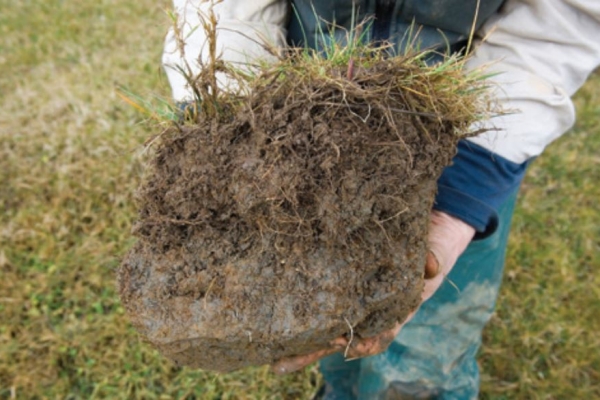
- Organic matter is a cornerstone of long-term resilience – invest in it.
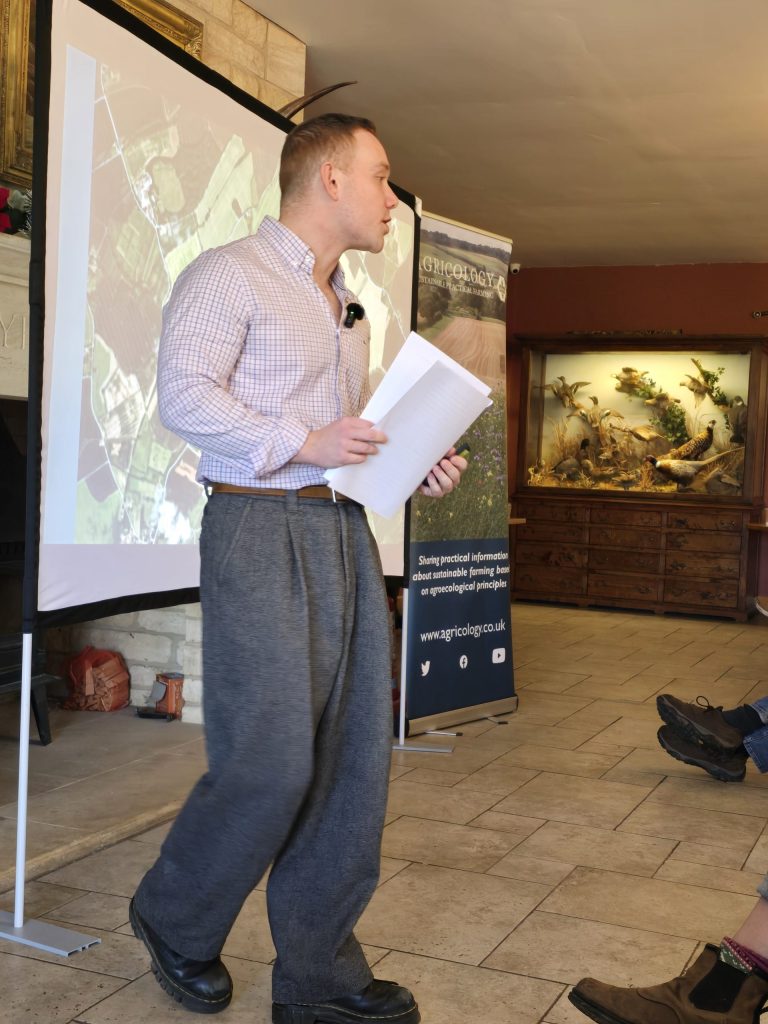
Tom McVeigh
Tom delivered a candid, forward-looking exploration of the challenges facing UK farming. His key message was the era of productivity-at-all-costs is over, and long-term resilience – economic, environmental, and structural – must now guide decision-making.
He began by examining the productivity–resilience trade-off. While past farm models prioritised scaling up, today this approach increases vulnerability to unpredictable weather and market fluctuations. Choosing resilience often means accepting lower short-term output, but chasing productivity alone carries far greater long-term risks.
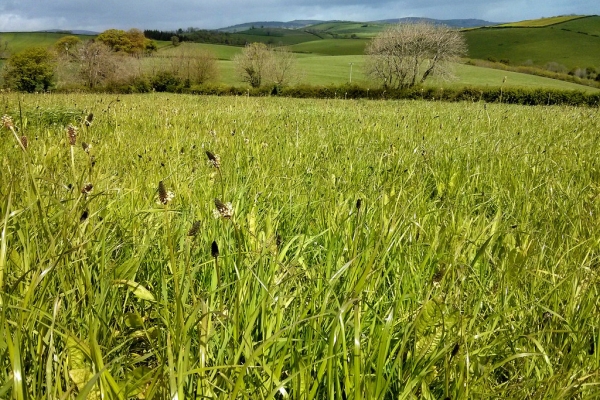
Using his own mixed farm of cattle, pigs, and diverse grassland as an example, Tom illustrated how practical decisions reflect systemic pressures. His landscape recovery pilot experimented with replacing high-yield ryegrass with diverse swards. The results showed that environmental gains can be outweighed by implementation costs if not carefully managed. He also noted that mixed farming, once common, may now provide greater market stability as cereal prices fall while livestock sectors strengthen.
“The old push for productivity-at-all-costs no longer fits the world we’re farming in; resilience must sit at the heart of long-term decision-making.”
Tom McVeigh
Exploring new markets and sharing elements of his Nuffield Scholarship, Tom highlighted hazelnuts as a high-value, low-labour opportunity. Perennial, non-perishable, and resilient to variable weather, hazelnuts have strong global demand, are suitable for UK soils, and achievable average yields. Barriers to growing them include market sizing, best-practice knowledge, and scaling for processing, but research and international experience are helping overcome the first two.
He concluded with a call to action: Government support is limited, so farmers must drive their own futures through innovation, collaboration, and diversification. Environmental expectations must be matched by fair market access and prices, making building resilient, profitable systems an industry-wide responsibility.
It’s been a great pleasure to delivery the first two events in the resilient farm roadshow alongside Henny Lowth and the wider AHDB team. A massive thank you to all our speakers and attendees so far.
Author:
Published date:
16th December 2025Related farming theme:
Key Farming Practices:
- Companion crops
- Cover crops
- Diverse / herbal leys
- Intercropping
- Low input crop varieties
- Mixed farming
- Silvoarable
- Soil monitoring
Related articles