
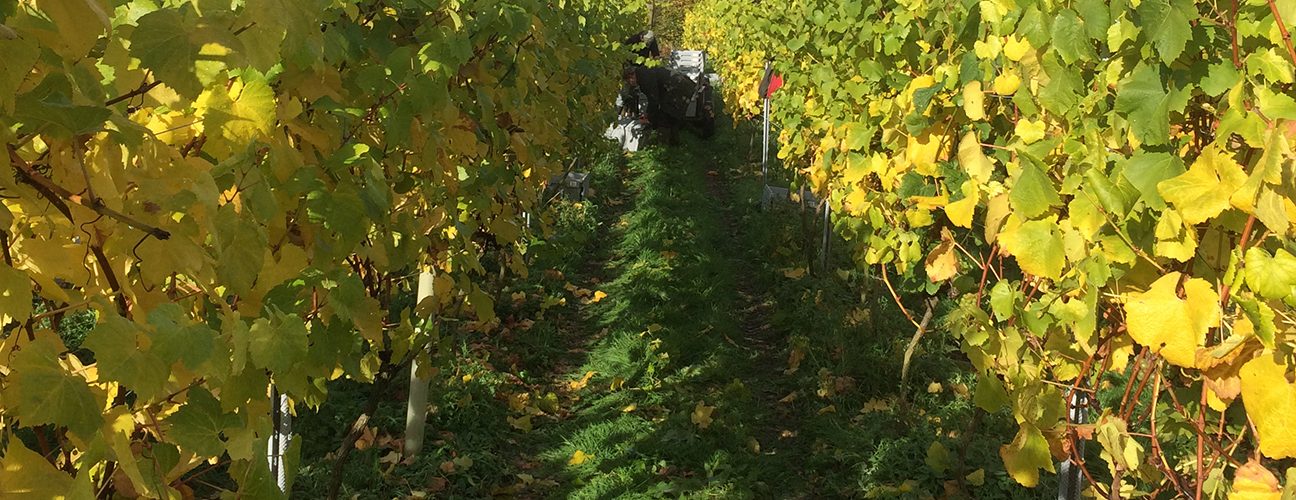
Resilient Vineyards: Practice, Viability, Market Strategy
Resource explained
Recording of an Oxford Real Farming Conference (ORFC) 2026 session which explores how vineyards can remain viable while working with organic, biodynamic, and regenerative systems. Chaired by Claire Lyons (CAWR), the panel of Abby Rose (Vidacycle/Sectormentor), Robin Snowdon (Limeburn Hill Vineyard), Justin Howard-Sneyd, Will Davenport (Davenport Vineyards) and Matt Robson (Harrow & Hope) shared practical strategies for reducing inputs, using cover crops, building soil health, and sustaining business resilience. The session offers a grounded introduction to UK viticulture, combining practical insight with ideas for building resilient, biodiverse vineyards.
Findings & recommendations
- Justin Howard-Sneyd highlights the growth in UK vineyards over the last 20 years, with climate change creating optimal growing conditions for increasing numbers of grape varieties. However, UK grape production is starting to exceed demand. He recommends the Regenerative Viticulture Foundation – a global, non-profit organisation advancing the future of wine growing through regenerative practices.
- Will Davenport has been managing both organic and regenerative vineyards in the last few years enabling him to compare the two systems:
- Average yield – 8150 vs 7311 kg/ha. Non-organic vines produce an extra 839 kg/ha (11.4%).
- Costs similar for both systems, except costs of fungicides. Non-organic £1034/ha, organic £231/ha. An organic saving of £803/ha.
- This results in organic needing to make up the shortfall in yield – at about 15p/bottle.
- Matt Robson explains that using annuals and perennials in alternate rows gives flexibility, and he is using sheep as biosecurity, with grazing after harvest enabling the sheep to clear up diseased leaves and fertilise the land.
- Matt advocates bringing trees back to the vine through ‘viti-forestry.’ He has filled gaps in the vineyard with hazel, willow, field maple, alder, pear, apple or sweet chestnut – species that can be coppiced and turned into the espalier system in place, meaning no change in management. Vine rows can also be swapped out (e.g. every 40m or so) for hedge rows, building an ecosystem fully connected above and under ground.
- Matt uses woodchip to help increase fungal dominance in the soils.
- Robin Snowdon explains that biodynamic growing is compatible with wine production as it works closely with space and terroir. Only half of the vineyards are planted with vines to help create a balance between habitat creation, creating biodiversity supporting the vines in a natural way, and production. They grow high, with no cropping below 60 cm allowing airflow.
- Abby Rose outlines some of the key metrics for a resilient vineyard and the power of data to guide decision-making:
- Pruning weights – bundled and measured on fishing scales – helps as a proxy for vine health over the years.
- Percentage of short shoots. Number of shoots not reaching the top wire.
Browse ORFC 2026 session recordings
Summary provided by:
Phil SumptionEdited by:
Janie CaldbeckAssociated Agricology Partner Organisation(s):

Organisation(s):
- Oxford Real Farming Conference
Date:
08/01/2026Evidence:
Farmer experience
Copyright:
All Rights ReservedRelated theme:
Key Farming Practices:
- Cover crops
- Encouraging beneficial insects
- Integrated pest management (IPM)
- Novel / niche crops
- Silvohorticulture
- Silvopastoral
Related articles
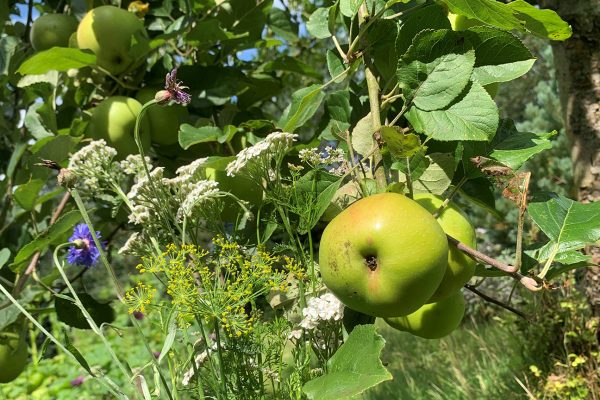
In this Nuffield Farming report David Butler investigates if it is possible to maintain good yielding orchards with a high percentage of class one fruit...
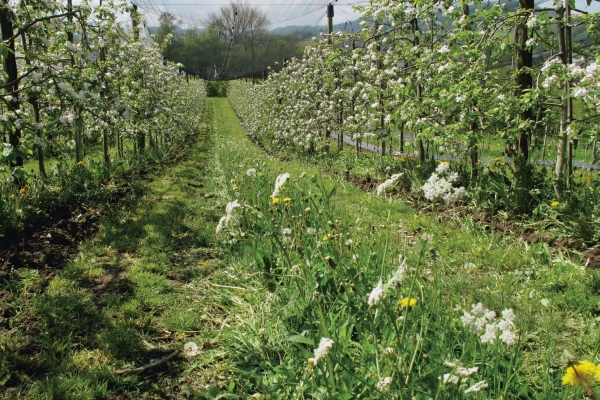
This article, adapted from a technical guide published as part of the EcoOrchard project, looks at advantages of sown flower strips, management considerations, costs, and...
Farmer case study on using trees to improve productivity on a mixed farm, providing shelter for vegetable crops and additional market products.