
Organisation: Agricology
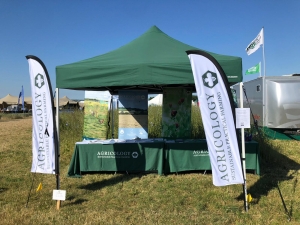
What are your thoughts on the Agricology website?
At Agricology we are always looking at ways to strengthen our communication and make sure you as a user can access the most interesting and relevant information possible. We would like to know your thoughts on our website. Any feedback will help to inform changes to its content and design.
Read more »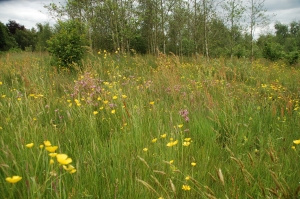
Woodmeadows – Three Hagges case study
Document created as part of an agroforestry case study of Three Hagges Woodmeadow – exploring the practicalities and benefits of combining woodland and meadows.
Read more »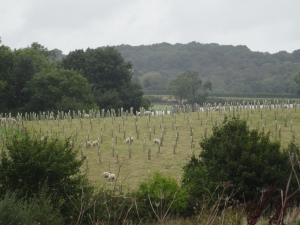
A National Network of Agroforestry Farms
This ‘Farming the Future’ A Team Foundation – funded project aimed to promote agroforestry as a way of farmers and landowners simultaneously and sustainably growing food, transitioning into the new ELM Scheme and contributing to ‘public goods.’
Read more »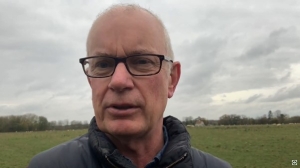
Healthy Farm Systems – John Pawsey
John Pawsey gives some insights into the principles of how he achieves health on his mixed organic farm in East Anglia, following his participation in the Farm System Health Project.
Read more »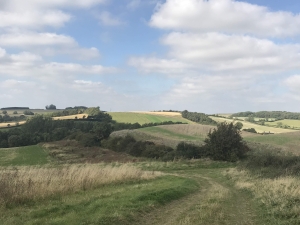
Land Sharing and Sparing
In this podcast, recorded as part of NOCC online in partnership with OF&G, ideas around land sharing and sparing are explored.
Read more »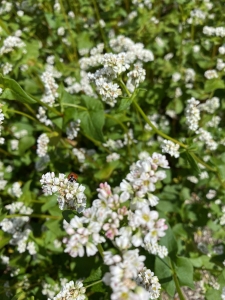
Getting Started with Agroecological Farming
There is increasing recognition of the benefits of integrated agroecological farming systems but it can be hard to know where to start. In this podcast, Katie Bliss speaks to farmers David Rose and George Young who share their experiences of moving towards an agroecological approach.
Read more »
Virtual Field Day: Cover crops, living mulch and leys @ Cereals LIVE 2020
Recording of a virtual event held as part of Cereals LIVE 2020 – a collaboration between Agricology, CFE and the NIAB team that came in part live from the NIAB Innovation Farm – digging mini soil pits to look at the impact of different leys and covers.
Read more »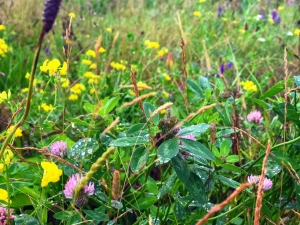
Herbal Leys Virtual Field Day: Parts 1 & 2
This is part 1 and 2 of a collaborative 2-part series of virtual events exploring establishment, management, soil health, grazing and ensiling in relation to herbal leys.
Read more »
Thank You to Our Farmers
A short Agricology video reflecting on the stoic efforts nationwide of all those who care for livestock and crops.
Read more »
Virtual Field Day: Intercropping in Arable Systems
Intercropping offers the potential for more efficient resource utilisation, reducing pest and disease pressure and better competition with weeds. This is a recording of an event co-ordinated by Agricology, Innovative Farmers and the ORC that was held as a virtual alternative to a field lab meeting.
Read more »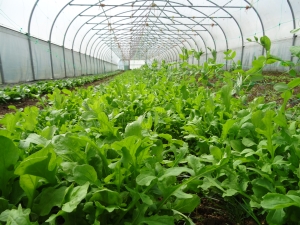
Climate change and UK horticulture: What is to come and how to build resilience
Footage recorded at ORFC 2020 of a workshop organised by the OGA and Agricology. Rosemary Collier of Warwick Crop Centre talks about some of the implications for horticulture of the UK getting warmer and wetter.
Read more »
Chloe MacLaren – Making Peace with the Weeds
Presentation and video footage recorded at the ORFC 2020 session on ‘The future of agroecological weed management.’ Chloe MacLaren shares the latest developments in weed ecology and new insights into the potential for more weed resilient systems.
Read more »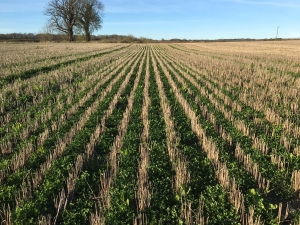
The four principles of weed control in organic growing
Footage recorded at the ORFC 2020 session on ‘The future of agroecological weed management.’ Mike Mallett of Maple Farm Kelsale shares insights into approaches to weed management he is implementing on his diverse 350 acre organic farm in Suffolk.
Read more »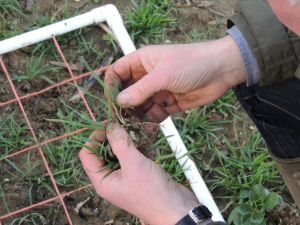
Future opportunities for precision non-chemical weed management
Footage recorded at the ORFC 2020 session on ‘The future of agroecological weed management.’ The RAU’s Nicola Cannon delves into the role of technology and the latest innovations for non-chemical weed control, exploring the challenges and trade-offs…
Read more »
Pen Rashbass
It’s funny the paths life takes you on. I originally started as a medic, became a developmental biologist and then discovered that sheep were wonderful. This led to a growing fascination in livestock behaviour, their social interactions and feeding preferences. From there, it was just a short step to become involved in conservation grazing which, […]
Read more »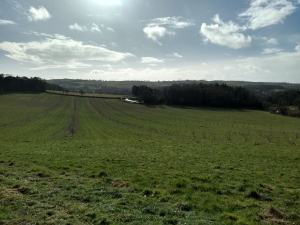
Dartington Agroforestry
Video footage recorded when the UK AFINET agroforestry network group met at the Dartington Estate in Devon to discuss agroforestry implementation.
Read more »
Organic Management Techniques Project
This project investigated the viability of transferring agroecological practices more widely across UK agriculture and produced factsheets for dissemination and engagement across a wide community of farmers.
Read more »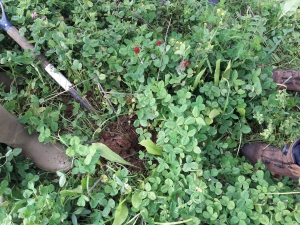
Diverse / Herbal sward mixtures
Herbal leys with a diverse range of species can help resolve soil fertility problems, making forage legume mixtures hard to resist.
Read more »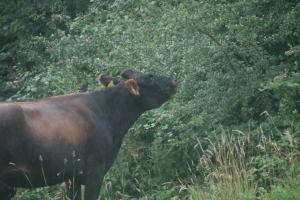
Outdoor access for all animals all year round
Animals that have maximum outdoor access are able to express much more natural behaviour than when housed, leading to improved animal welfare. Find out more here.
Read more »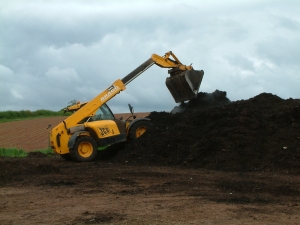
Use of green waste compost
Using green waste compost to help manage reductions in soil organic matter in arable soils; reducing fertiliser use, improving soil health, and reducing landfill
Read more »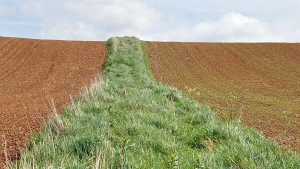
Encouraging natural predators (outdoors)
This abstract describes information on encouraging natural predators to help control crop pests that reduce yield and quality.
Read more »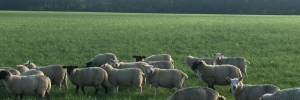
Integrating leys in arable rotations
Integrating leys in arable rotations can provide multiple benefits including weed management, soil health and pollinator habitat provision.
Read more »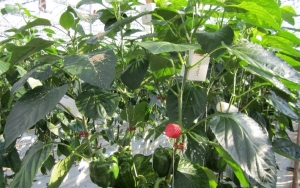
Biological control (indoors)
Biological control of pests in indoor production can be applied on both organic and non-organic farms. Find out how and potential benefits you could expect to gain here.
Read more »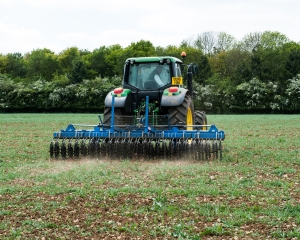
Use of mechanical weed control
Mechanical weed control has long been used on organic farms, but recent advances in technology make it a realistic option for non-organic farmers too.
Read more »